
BashEmailFOR DIRECTADMIN
A DirectAdmin spam filter that protects both sides of every mailbox.
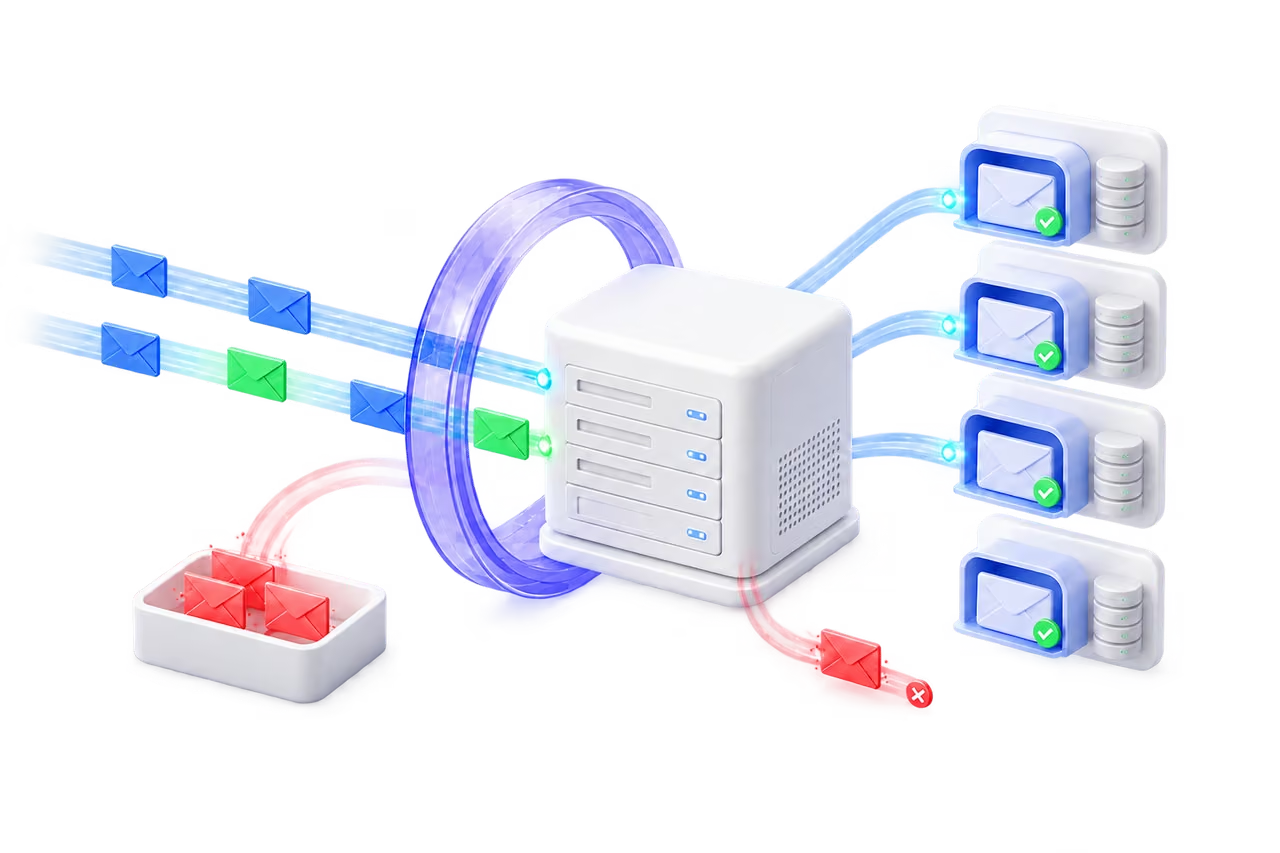
Keep incoming spam, phishing and infected attachments away from customer inboxes, then contain outgoing abuse before one compromised sender damages the server's reputation. BashEmail filters mail on the DirectAdmin server you already operate, without changing MX records or sending customer messages through an outside gateway.
No MX or DNS change
Incoming and outgoing protection
Mail stays on your server
DirectAdmin email security for shared hosting
An unwanted message and a compromised sender create different risks.
Customers judge a mail service by what reaches the inbox. Repeated promotions, convincing phishing messages and harmful attachments quickly become support tickets. Yet the costliest incident may start quietly in the opposite direction when a stolen mailbox password or vulnerable website begins sending abuse through the server.
A DirectAdmin spam filter should protect both directions without treating every user alike. BashEmail lets the hosting team set the server-wide posture, make exceptions for a domain or mailbox and contain risky sending without disabling the customer's website, incoming mail or the rest of the hosting account.
On-server DirectAdmin spam filtering
Make one clear decision before each message reaches its destination.
BashEmail stays in the existing mail path. It applies the appropriate domain and mailbox policy, then sends wanted mail onward while suspicious messages follow the outcome selected by the administrator.
MAIL ARRIVESWanted mail and unwanted mail Existing delivery route
BASHEMAILFilter · scan · apply policy Runs on the DirectAdmin server
CLEAR OUTCOMEInbox, Junk or quarantine Decision remains visible
Set strictness where it belongs
Apply a different level to one domain or mailbox without forcing the same compromise on every DirectAdmin user.
Hold infected mail for review
Messages containing malware or viruses are kept safely instead of vanishing without an explanation.
Choose quarantine or Junk
Decide whether caught messages should be held centrally or delivered to the recipient's Junk folder.
One server, properly separated users
Reduce avoidable support work.Customers can find, preview, deliver or delete their own held messages without asking an administrator.
Keep every account private.A DirectAdmin user cannot search or act on mail belonging to a different hosting account.
Make retention predictable.The quarantine explains how much is held, how recent it is and when older mail will be removed automatically.
Give each DirectAdmin user control without exposing anyone else's mail.
Shared hosting depends on clear boundaries. BashEmail keeps quarantine access scoped to the domains, subdomains and mailboxes assigned to the current user. The hosting team retains the complete server view, while customers can resolve routine held-mail decisions for themselves.

HELD MAILPrivate quarantine
Only this user's domainsSearch sender or subjectSearch
MESSAGEREASONACTION
Updated account statementbilling@example.org
ReviewReleaseMailbox verification requirednotice@lookalike.example
PhishingDeleteUnexpected document archiveattachment scanned
MalwareDelete
Quarantine that improves future decisions
Train and releaseDeliver wanted mail and improve future treatment.
Train and deleteRemove unwanted mail and reinforce the decision.
Release onlyDeliver this message without changing later behaviour.
Delete onlyRemove this message without using it for future decisions.
Resolve the message and record what the filter should learn from it.
Administrators can search and preview held mail across the server. Customers work only inside their own scope. Both can choose an action that simply resolves this message or one that also improves how similar mail is handled later.
Outgoing spam protection for DirectAdmin
Stop sending only.Incoming mail, websites, FTP and other hosting services remain available while outbound delivery is contained.
Protect every sending address.Reputation monitoring follows the addresses the server actually uses for delivery and warns when removal action is needed.
Keep the response visible.The hosting team can see why a sender entered watch, hold or suspension and when the automatic state will end.
Contain the sender without taking the customer offline.
A compromised mailbox or website is a security incident for the customer and a reputation incident for the hosting company. BashEmail watches outgoing activity, supports per-sender and per-domain rate limits, and gives legitimate higher-volume senders deliberate exceptions.
Automatic responses move through watch, hold and sending suspension. Every automatic action expires, so a temporary restriction is not left behind after the original risk has passed.
OUTGOING PROTECTIONSender response
Automatic actions expireWatchUnusual sending becomes visible without changing delivery.
ObserveHoldQuestionable delivery pauses while the account is reviewed.
ContainSuspend sendingOutbound mail stops while other account services continue.
ProtectDirectAdmin mail security without another service to manage
Give administrators the whole picture and users only the decisions that belong to them.
BashEmail brings server-wide mail activity, policy and quarantine together while maintaining account boundaries. The view below uses fictional data to demonstrate the split between hosting operations and customer self-service.
ADMINServer-wide operations
Review incoming and outgoing volume, delivery outcomes, busiest senders, incoming sources, sign-in attack sources, reputation warnings and searchable message history.
- Policies for the server, domain or mailbox
- Central quarantine and message search
- Sending limits with deliberate exceptions
- Evidence for every automated response
USERPrivate mail decisions
Find and resolve held messages for assigned domains without a support ticket and without any access to another user's email.
- Preview and release wanted messages
- Delete one, selected or all messages
- See the reason mail was held
- Understand automatic retention
Demonstration content only. No customer domains, addresses or messages are shown.
QUESTIONBASHEMAILEXTERNAL GATEWAY
Where is mail inspected?On your serverOn provider infrastructure
Do MX records change?NoUsually required
Where is quarantine kept?On your serverOutside your server
Who controls the mail route?Your hosting teamThe gateway provider
Not a cloud relay or external gateway
Keep customer mail on the DirectAdmin server where it already lives.
Cloud filtering services often require every domain to send incoming mail through an outside provider. BashEmail installs on the existing DirectAdmin server instead. MX records, DNS settings, mailboxes and the normal delivery route stay in place.
No third party becomes the temporary holder of customer messages or quarantine. The hosting company keeps operational control and customers continue using the mail service they already know.
Explore the complete BashEmail platformOperational safety for hosting mail
See what BashEmail would do before it changes delivery.
A mail filter sits on a critical service. BashEmail is designed to enter production cautiously and leave the server in a predictable state.
Observe before enforcing
The initial installation holds nothing. Administrators review likely outcomes on their own traffic before enabling protection.
Fail open
If filtering is unavailable, mail continues rather than being deferred or bounced because of BashEmail.
Respect existing mail service
BashEmail adds protection without taking ownership of the customer's domains, mailboxes or delivery route.
Uninstall cleanly
Removal restores the previous filtering state, releases held mail and preserves what BashEmail learned for a later reinstall.
BashEmail pricing
Straightforward pricing for the whole mail server.
Choose a plan by the number of hosting accounts on the server. Incoming filtering, outgoing abuse controls, malware scanning and quarantine are included in both.
Lite
Up to 10 hosting accounts
$12per month
Get BashEmail
- Incoming spam and malware filtering
- Outgoing abuse detection and control
- Quarantine and end-user self-service
- Per-domain and per-mailbox policies
- Up to 10 hosting accounts
Unlimited accounts
Standard
Unlimited hosting accounts
$23per month
Get BashEmail
- Everything in Lite
- Unlimited hosting accounts
- Unlimited hosted domains
Price per server, per month, excluding VAT. Cancel anytime. Talk to us.
DirectAdmin spam filter questions
What hosting teams should know before enabling BashEmail.
What is BashEmail for DirectAdmin?
BashEmail is an on-server DirectAdmin spam filter for hosting companies. It filters incoming spam, phishing and malware, contains outgoing abuse, provides server-wide administration and gives users private access to held mail associated with their own domains.
Does the DirectAdmin spam filter require an MX change?
No. BashEmail runs on the existing DirectAdmin server and works with the current mail route. Customer domains do not need to point their MX records at an outside filtering gateway.
Does customer mail leave the server for inspection?
No. Filtering and quarantine remain on infrastructure operated by the hosting company. BashEmail is not a cloud mail relay and does not send customer messages to a third party for inspection.
Can different domains use different spam filter settings?
Yes. Strictness can be adjusted for an individual domain or mailbox, and allow or deny lists can represent trusted relationships and known unwanted sources without forcing the same policy on every user.
What happens to suspicious incoming mail?
The administrator chooses whether caught messages are held in quarantine or delivered to the recipient's Junk folder. Infected messages are held for review rather than silently discarded.
How does BashEmail handle outgoing spam?
BashEmail can move risky sending through watch, hold and sending-suspension stages. Rate limits support per-sender and per-domain overrides, and automatic actions expire instead of remaining in place indefinitely.
Does a sending suspension disable the DirectAdmin user?
No. The suspension applies to outgoing mail only. Incoming mail, websites, FTP and the rest of the hosting account remain available while the sending problem is investigated.
Can DirectAdmin users manage their own quarantine?
Yes. A user can preview, release and delete held mail for assigned domains, including bulk deletion and empty-all actions. Account boundaries prevent access to messages belonging to another user.
What happens if the filter is unavailable?
BashEmail is designed to fail open. Mail continues through the server rather than being stopped, deferred or bounced because the filtering service is unavailable.
BASHEMAIL FOR DIRECTADMIN
Protect customer inboxes and the reputation that delivers their mail.
Add incoming and outgoing email security without changing MX records or moving messages away from your server.